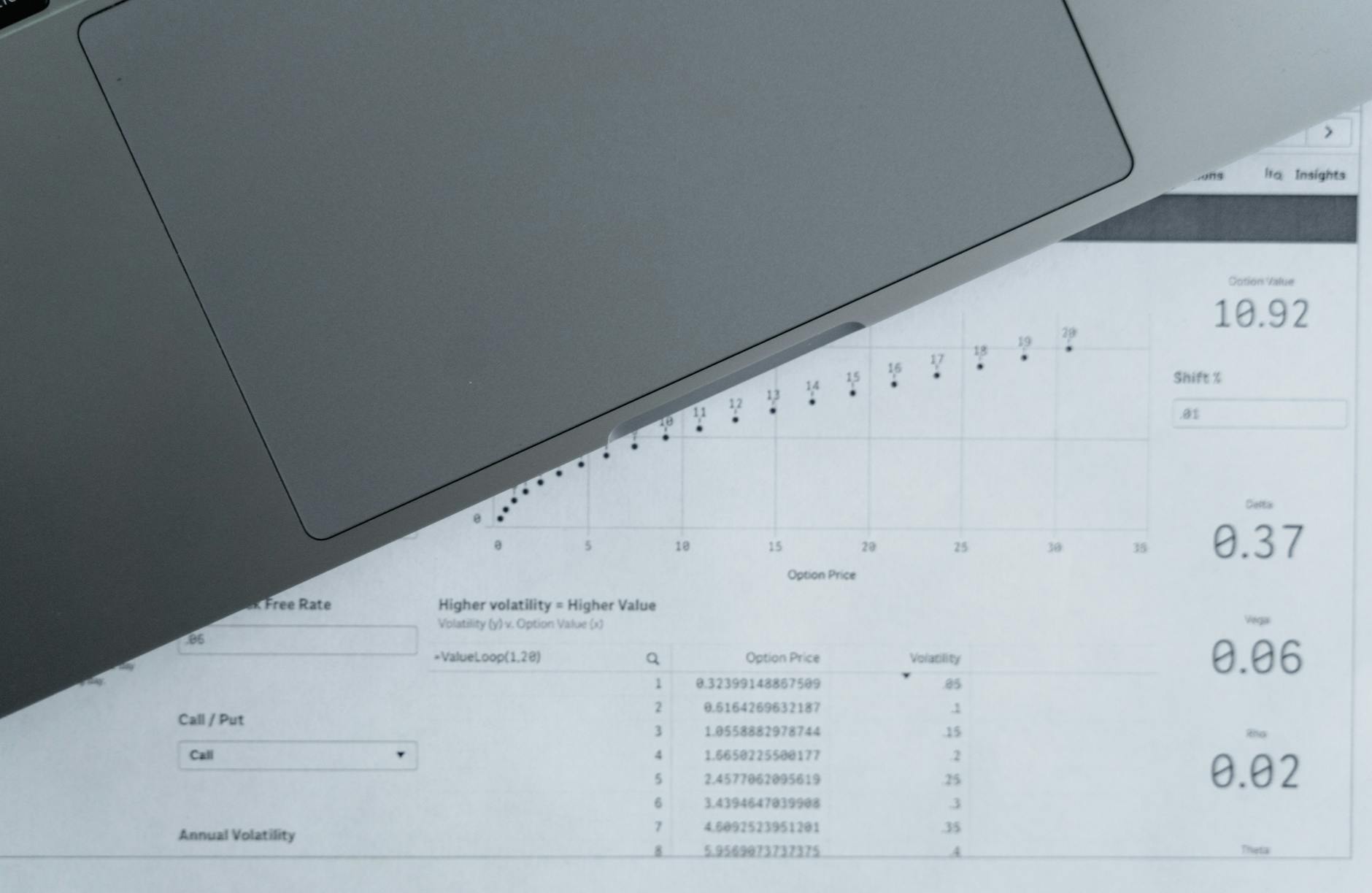
Is Your Pricing Strategy Built to Last, or Built on Guesswork?
Let's be honest: for most businesses, setting prices feels less like a science and more like a high-stakes gamble. You look at competitors, factor in costs, consider perceived value, and then… take a leap of hope. You hope customers will pay. You hope you’re not leaving money on the table. You hope your model can withstand a shifting economy or a new market entrant.
This traditional approach is fraught with stress. But what if you could pressure-test your pricing strategy before you ever launch it? What if you could simulate market reactions, forecast demand elasticity, and optimize for profit and conversion—all before making a single public change? This is no longer a hypothetical. The emergence of AI-powered pricing model stress tests is turning pricing from an art into a resilient, data-driven engineering feat.
What is an AI-Powered Pricing Stress Test?
An AI-powered pricing stress test is a systematic process that uses artificial intelligence and machine learning to simulate how your proposed pricing model will perform under various real-world conditions. It moves beyond simple spreadsheet calculations by analyzing vast, interconnected datasets to predict customer behavior, competitive responses, and financial outcomes.
Think of it as a flight simulator for your revenue strategy. Before a pilot takes a new plane into a storm, they test its limits in a safe, virtual environment. An AI stress test does the same for your pricing, allowing you to encounter turbulence—like a price-sensitive market segment or a competitor's sudden discount—and adjust your controls before you're in the air.
The Core Components AI Analyzes:
- Historical Transaction Data: Your own sales history, conversion rates, and customer segments.
- Competitive Intelligence: Real-time and historical pricing data from your market competitors.
- Market & Economic Indicators: Factors like seasonality, consumer sentiment, and broader economic trends.
- Customer Behavior Signals: Data from website interactions, engagement with marketing, and support queries.
- Product/Service Value Metrics: Usage data, feature adoption, and perceived value drivers.
How to Run Your Own Pricing Stress Test: A Practical Guide
You don't need a team of data scientists to begin applying these principles. Here’s a framework to start stress-testing your pricing with a more intelligent approach.
1. Define Your Stress Scenarios
First, identify the "what-ifs" that keep you up at night. These become your test scenarios. Common ones include:
- The Competitor Undercut: "What if our main competitor drops their price by 15%?"
- The Value Question: "What if we introduce a premium tier at a 40% price increase? What features justify it?"
- The Market Downturn: "What if economic conditions reduce our target market's willingness to pay by 10%?"
- The Scaling Challenge: "Does our volume discount model actually improve customer lifetime value, or does it erode margins?"
2. Gather and Feed the Data
AI models are powered by data. Start consolidating the information you have:
- Internal Data: Export 12-24 months of sales, CRM, and web analytics data.
- Competitive Data: Use tools (or manual tracking) to build a log of competitor pricing and packaging changes.
- Customer Feedback: Compile survey data, support tickets, and sales call transcripts that mention price or value.
3. Leverage AI Tools for Analysis & Simulation
This is where technology transforms the process. You can use specialized platforms or AI-driven business intelligence tools to:
- Run Predictive Models: Forecast how different price points will affect conversion rates for different customer segments.
- Perform Conjoint Analysis (Automated): Use AI to virtually present different price/feature bundles to simulated customer audiences and gauge preference.
- Model Elasticity: Precisely calculate price elasticity of demand for your specific offerings.
- Simulate Outcomes: See the projected impact on overall revenue, profit margins, and market share for each of your "stress scenarios."
4. Interpret, Iterate, and Implement
The analysis will give you a range of probable outcomes, not a single perfect answer. Your job is to:
- Identify the Resilient Model: Which pricing structure performed best across multiple stress scenarios? That's likely your most robust option.
- Spot Hidden Opportunities: Did the data reveal an underserved segment willing to pay for a specific feature set? That could inform a new package.
- Plan Your Rollout: Use the insights to prepare your sales and marketing teams. If the test predicts a 5% churn in a certain segment, prepare a targeted retention campaign.
The Tangible Benefits: Beyond Just a Number
Adopting this methodology does more than just find the "right" price. It fundamentally changes your business posture.
- Confidence in Decisions: Replace gut feeling with quantifiable risk assessment. Launch pricing changes with clarity.
- Proactive Strategy: Anticipate market moves instead of just reacting to them. You'll see competitor vulnerabilities and economic shifts as opportunities.
- Enhanced Customer Understanding: You'll learn what different customer segments truly value, leading to better product development and marketing.
- Reduced Launch Risk: For new products or services, this test is invaluable. It de-risks one of the most critical launch components.
At Kubl, this is precisely how we embed resilience into the businesses we help launch in 30 days. We integrate AI-powered market and pricing analysis from day one, ensuring our clients go to market with a strategy that's not just creative, but computationally validated for stability and growth. It turns one of the biggest launch anxieties into a confirmed strength.
Your Call to Action: Start Stress-Testing
Pricing can no longer be a "set it and forget it" element of your business. In a dynamic, competitive landscape, your pricing model needs to be as agile and intelligent as the rest of your operations.
Begin by committing to one step. Pick one "stress scenario" from your business. Gather the relevant data you have on hand, and explore one of the many AI-powered analytics tools available today—even a start can reveal surprising insights.
If the process of building a data-driven, stress-tested pricing model—especially for a new launch or a major pivot—feels daunting, that's where a structured approach shines. Consider partnering with a team that bakes this intelligence into the foundation of your business.
Ready to replace pricing guesswork with engineered confidence? Let's explore how an AI-powered strategy can build a more resilient and profitable business for you. Contact Kubl today for a consultation on building your data-driven launch strategy.